AirDoctor Review (2026): Is It Really Worth It? My Honest Review After Using AirDoctor for 4 Years
Heidi Petrusaitis
7/23/202611 min read
Why I Bought an AirDoctor
One of the biggest mindset shifts I've had over the last several years is realizing that supporting our health isn't just about what we put into our bodies—it's also about reducing what we're constantly exposed to.
As a former registered nurse, I spent years focusing on treating illness. Now, I spend much more time thinking about prevention and creating a healthier home for my family.
We spend the majority of our lives indoors, yet most people rarely think about the quality of the air they're breathing every single day.
Between dust, pollen, pet dander, cooking fumes, wildfire smoke, and volatile organic compounds (VOCs) from everyday products, our indoor air can actually be more polluted than the air outside.
That realization really stuck with me.
I didn't expect an air purifier to solve every problem. I wasn't buying it because I thought it was some miracle machine.
I bought it because I wanted to reduce one more source of unnecessary exposure for my kids.
For me, it's always been about asking:
"What's one simple thing I can do to create a healthier home?"
An air purifier felt like one of those foundational changes that would quietly work in the background every single day.
Why I Started with Just One Air Doctor
I'll be honest—the price gave me pause.
At the time, I couldn't justify buying an air purifier for every room in our house. So I started with one.
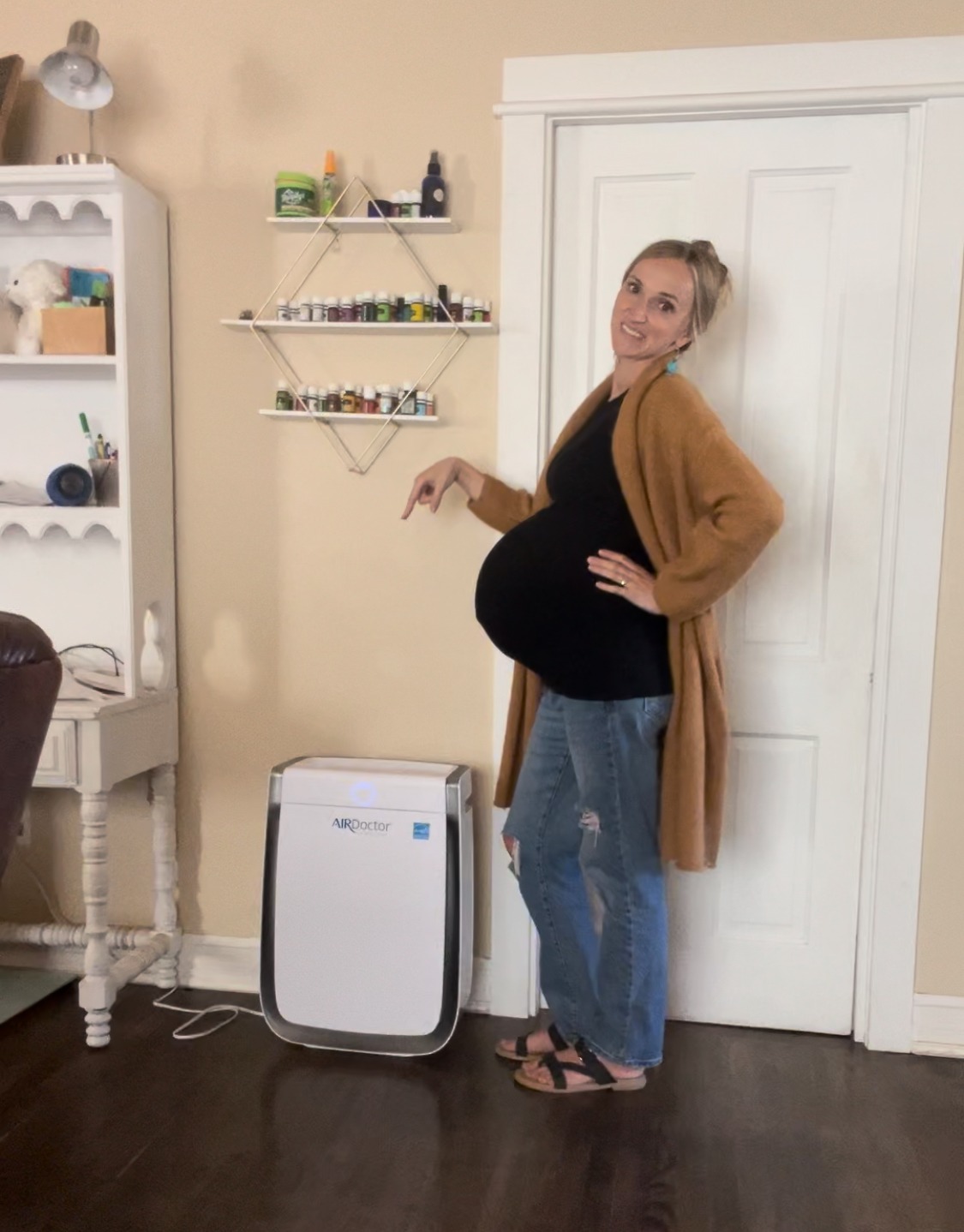
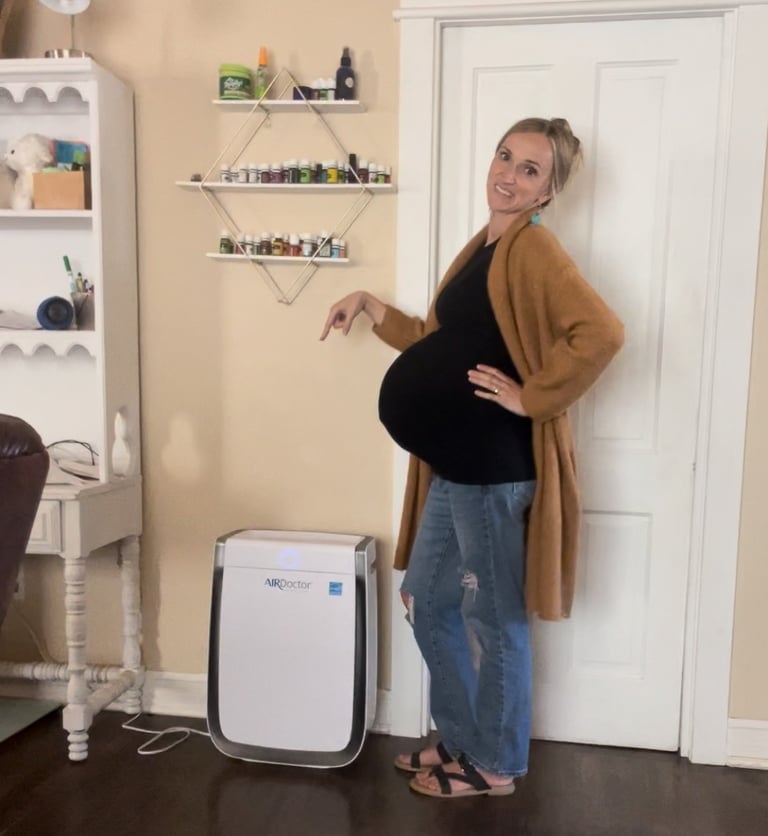
I purchased the AirDoctor 3000 (which is now the AirDoctor 3500) and put it in our living room because that's where we spend the most time as a family.
My plan was simple: If I loved it, I'd slowly add more over time.
That's exactly what happened.
About a year later, I added two AirDoctor 2000 units—one for each bedroom.
Today, we have three AirDoctors running in our home, and if I'm being completely honest, I'd still like to add a fourth one someday.
What I've Actually Noticed After Four Years
One thing I want to be really clear about...
An air purifier isn't like flipping on a light switch where everything suddenly feels different overnight.
The changes are more subtle.
But over time, they became impossible for me not to notice.
There's noticeably less dust.
Do I still dust my house? Of course. I have kids. I have a dogs. Dust is part of life.
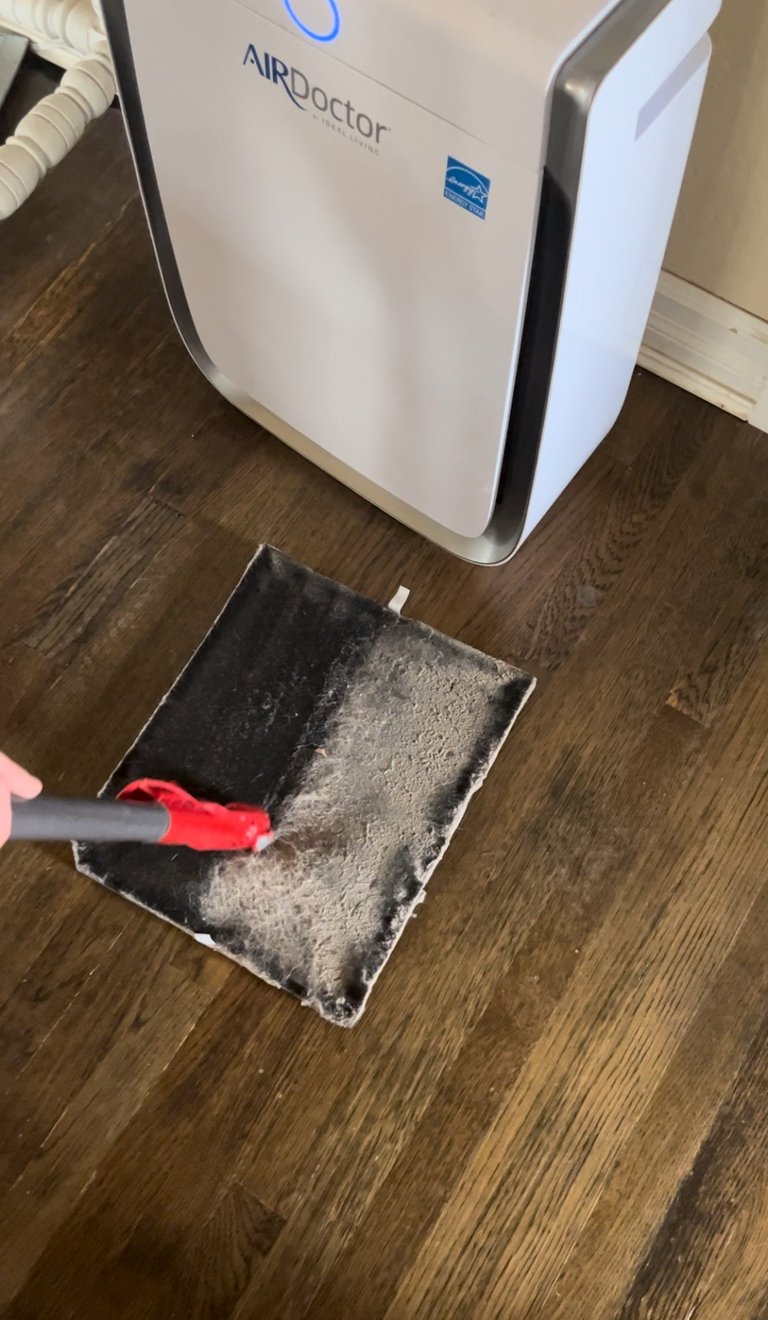
But I definitely don't feel like I'm constantly wiping down furniture the way I used to. Even when I vacuum the pre-filter every month (which catches a surprising amount of dust and dog hair), I'm reminded of everything the purifier is pulling out of the air before it settles around our home.
Wildfire smoke season is so much more manageable.
Living in Montana, wildfire smoke has unfortunately become part of summer.
Before we had AirDoctors, you could smell the smoke inside our house on the really bad days.
Now, there's a noticeable difference. Air Doctors have a carbon filter which filters out orders and VOC's.
We still keep the windows closed when the air quality is poor, but the inside of our home smells cleaner, and I feel like we're doing something proactive to protect our family's lungs.
Allergies seem better at home.
I'm not claiming AirDoctor cures allergies—it doesn't.
But I have noticed that our family seem to feel better when they're in our home compared to when we go to other peoples houses.
Could there be other factors? Absolutely.
But reducing pollen, dust, pet dander, and other airborne particles is exactly what an air purifier is designed to do, so this has been a welcome bonus.
What Makes AirDoctor Different?
When I first started researching air purifiers, I quickly realized something...
Not all air purifiers are created equal.
I assumed if it had a HEPA filter, they were all pretty similar. But once I dug into the research, I learned there are some pretty significant differences between brands—especially when it comes to things like wildfire smoke, VOCs (volatile organic compounds), allergens, and odors.
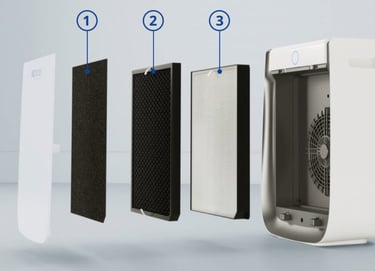
One of the biggest reasons I chose AirDoctor was because it doesn't rely on just one filter. It uses a three-stage filtration system, and each filter has a different job.
Let's break it down.
Stage 1: The Pre-Filter
The first thing air passes through is the pre-filter.
Think of it as the "first line of defense."
It catches the larger particles like:
Dust
Hair
Pet fur
Lint
This helps protect the more expensive filters behind it and extends their lifespan.
One tip I've learned after owning AirDoctors for several years: vacuum the pre-filter regularly.
I usually vacuum mine about once a month, and I'm honestly amazed and slightly disgusted every time.
Between dog hair, dust, and everything else it catches, it's incredibly satisfying—and a little gross—to see what would have otherwise been floating around our house.
That simple habit helps keep the purifier running efficiently and can help your filters last longer.
Stage 2: The Carbon Filter
This is one feature I think gets overlooked.
A lot of air purifiers advertise that they have a carbon filter, but in many cases it's just a very thin carbon sheet.
AirDoctor uses a much more substantial activated carbon filter that's designed to help reduce:
Cooking odors
Smoke smells
VOCs
Household chemicals
Some gases
As someone who tries to cook a lot of our meals at home, I notice this feature all the time.
If I accidentally burn dinner (which definitely happens more often than I'd like to admit 😅), the AirDoctor sensor notices almost immediately.
Within seconds, the light changes color, the fan speeds up, and it starts working harder to clean the air.
It's one of those little things that reminds me the purifier isn't just sitting there looking pretty—it's actually responding to what's happening in our home.
Stage 3: The UltraHEPA Filter
This is really what sets AirDoctor apart.
Most air purifiers use a standard HEPA filter.
AirDoctor uses what's called an UltraHEPA filter.
According to AirDoctor, it captures particles as small as 0.003 microns, including many of the ultra-fine particles found in wildfire smoke. That's significantly smaller than the particles used in the standard HEPA testing benchmark.
Without getting overly technical, here's why that matters:
Wildfire smoke isn't just made up of large pieces of ash that you can see.
It's also made up of incredibly tiny particles that can stay suspended in the air and be inhaled deep into the lungs.
Living in Montana, that's become one of the biggest reasons I appreciate having an AirDoctor in our home.
💡 Former Nurse Tip
One of the biggest shifts I've made over the years is realizing that supporting our health isn't only about what we eat or the supplements we take. The environment we live in matters too. Clean water, cleaner indoor air, quality sleep, and nutrient-dense food all work together. I don't see AirDoctor as a replacement for healthy habits—it's another tool that helps reduce our overall toxic load.
My Favorite Feature: Auto Mode
If I had to pick one feature that makes AirDoctor worth the investment, it would honestly be Auto Mode.
Most of the time, I don't even think about it.
I leave it on Auto and let it do its thing.
If the air is clean, it stays nice and quiet.
If I burn something while cooking, it reacts within seconds.
The sensor changes from blue to orange or red, the fan speeds up, and it starts cleaning the air without me lifting a finger.
I love products that make healthy living easier instead of giving me one more thing to manage.
AirDoctor is one of those products.
Is AirDoctor Loud?
This is probably one of the most common questions I get.
The short answer? Not in my opinion.
On the lower settings, I barely notice it's running.
The AirDoctor 2000 units in our bedrooms I honestly don't hear.
The only time they really get loud is when they're supposed to—when they detect poorer air quality and automatically increase the fan speed. Which so far only happens to the one in our living room/dining room as it picks up the toxins in teh air when I burn something.
Personally, I actually like hearing that.
It tells me the purifier is doing exactly what I bought it to do.
The One Thing I Don't Love
No product is perfect, and I want to be honest about that.
My biggest complaint is the cost of replacement filters.
They're definitely more expensive than replacing a basic furnace filter or a basic air purifier filter.
That said, they also don't need to be replaced nearly as often as some people assume.
For our family:
I usually replace the UltraHEPA filter about once a year.
The carbon filter gets replaced about twice a year.
When I think about everything those filters are capturing day after day, I personally feel the cost is justified—but it's still something to factor into your budget before purchasing.
I'd much rather be upfront about that than have someone be surprised later like I was.
Is AirDoctor Worth the Money?
If you're simply looking for the cheapest air purifier you can find, then honestly...
No.
AirDoctor probably isn't the right choice.
But if your goal is to invest in cleaner indoor air for your family—especially if you deal with allergies, pets, wildfire smoke, or you're simply trying to reduce your overall toxic load—I think it's one of the best investments you can make for your home.
I started with just one because that's what fit our budget.
Four years later, I own three.
That's about as honest of a review as I can give.
AirDoctor vs. Other Air Purifiers
One question I get asked all the time is:
"Why AirDoctor instead of a less expensive air purifier?"
The truth is, there are a lot of great air purifiers on the market, and the "best" one really depends on your goals.
Here's how I personally look at some of the most popular options.
AirDoctor vs. Dyson
Dyson makes beautiful products. If you're looking for an air purifier that also functions as a fan and fits seamlessly into a modern home, Dyson has some great options.
For me, though, filtration was the priority and the price of Dyson was to high for our budget. At the time of writing this the cheapest Dyson Air Purifier is $949 for one.
I wasn't looking for a fan or another smart home gadget. I wanted an air purifier that focused on cleaning the air as effectively as possible, especially during wildfire smoke season.
That's why I ultimately chose AirDoctor.
AirDoctor vs. Levoit
Levoit is one of the most popular budget-friendly brands. We actually started with one of their cheapest ones about 10 years ago because it fit our budget. This one off Amazon is similar to the one we started with and as of the time I'm writing this it is just $44 which is a great place to start if your budget is tight!
I'd honestly rather see someone use any air purifier than no air purifier at all.
That said, once we had a little bit more wiggle room in our finances we finally purchased the AirDoctor 3000 because of its UltraHEPA filtration, substantial activated carbon filter, and its performance during wildfire smoke season.
It simply aligned better with what I was looking for.
AirDoctor vs. Blueair
Blueair has a loyal following and makes quality products.
The biggest difference for me came down to filtration technology.
Per Blueairs website they say "Our HEPASilent™ technology captures 99.97% of airborne particles down to 0.1 microns" whereas Air Doctors uses an UltraHEPA® filter that is proven to capture 99.99% of airborne particles as small as 0.003 microns.
I'm definitely not an engineer, but one thing that impressed me while researching air purifiers was learning just how incredibly small of a particle AirDoctor is designed to capture. Its UltraHEPA filter is tested to capture particles down to 0.003 microns—about 33 times smaller than 0.1 microns. During wildfire smoke season, that's one of the reasons I feel good about having them running throughout our home.
AirDoctor vs. Molekule
Molekule appears to have great Air Purifiers. However just like the Blueair it came down to their filtration technology.
Molekule filters down to 0.1microns where as Air Doctor filters down to 0.003 microns which means it filters particles that are 33x smaller than the Molekule can.
Surprising the prices points are very similar to Air Doctor as well.
At the end of the day, I just wanted something that would filter as small as a particle as possible and was independently tested so I could trust that it does what they claim it does, which was ultimately the Air Doctor.
Who I Think Should Buy an AirDoctor
After using AirDoctor for more than four years, here's who I think benefits the most.
I think AirDoctor is a great investment if you:
Live in an area affected by wildfire smoke.
Have seasonal allergies.
Have pets.
Want to reduce dust in your home.
Are creating a lower-tox home one step at a time.
Have young children and want cleaner indoor air.
Spend a lot of time indoors.
Want an air purifier that largely takes care of itself with Auto Mode.
It's one of those products that quietly works in the background every single day.
You don't necessarily notice it minute by minute—but over time, I believe it makes a meaningful difference.
Who Might Not Need an AirDoctor
I also think it's fair to mention who might not need one.
It may not be the best fit if:
You're simply looking for a fan.
Your budget doesn't allow for the upfront investment.
You aren't willing to replace filters as recommended.
You're expecting an air purifier to completely solve allergy or asthma symptoms on its own.
An air purifier is one piece of the puzzle.
Fresh air, reducing indoor pollutants, controlling humidity, vacuuming regularly, and living a healthy lifestyle all play a role in supporting cleaner indoor air.
Frequently Asked Questions
Is AirDoctor really worth the money?
In my opinion, yes.
It's definitely an investment, but after owning three AirDoctors for over four years, I'd buy them again without hesitation.
If I were starting over, I'd probably do exactly what I did the first time—buy one, place it in the room where we spend the most time, and slowly add more over time.
Does AirDoctor help with wildfire smoke?
From my experience, absolutely.
During wildfire season, we've noticed significantly less smoke smell inside our home while the AirDoctors are running.
Living in Montana, that's become one of my favorite benefits.
Does AirDoctor help with allergies?
It has for our family.
I can't promise it'll eliminate allergy symptoms, but reducing airborne pollen, dust, pet dander, and other particles can absolutely contribute to a cleaner indoor environment.
Is AirDoctor loud?
Not at all.
On lower settings, it's incredibly quiet.
The only time I really hear it is when Auto Mode detects poorer air quality and increases the fan speed—which is exactly what I want it to do.
How often do you replace the filters?
For our home, I typically:
Replace the UltraHEPA filter about once a year.
Replace the carbon filter about twice a year.
I also vacuum the pre-filter about once a month to remove dust and dog hair, which helps keep everything running efficiently.
Is AirDoctor HSA or FSA eligible?
Some AirDoctor models may be eligible with a Letter of Medical Necessity, but eligibility can vary depending on your plan. Check with your HSA or FSA provider before purchasing.
My Final Thoughts
When I first bought an AirDoctor, I honestly wondered if I'd regret spending the money.
Now, four years later, I don't.
In fact, I wish I hadn't spent so long debating whether it was worth it.
If you've followed me for any length of time, you know I don't recommend products just because they're popular. I recommend products that I genuinely use in my own home and would spend my own money on again.
AirDoctor falls into that category.
It's not flashy.
It won't magically transform your health overnight.
But it quietly works in the background every single day to help create a cleaner indoor environment for your family.
For me, that's worth the investment.
My Overall Rating
⭐ Air Quality: 10/10
⭐ Wildfire Smoke: 10/10
⭐ Allergy Support: 9/10
⭐ Ease of Use: 10/10
⭐ Noise Level: 9/10
⭐ Filter Life: 9/10
⭐ Value: 9/10
Overall Rating: ⭐⭐⭐⭐⭐ (4.9/5)
Shop My Favorite AirDoctor Models
If you've decided an AirDoctor is the right fit for your home, I've linked the models our family personally uses below.
I always appreciate it when you choose to shop through my links because it helps support my work at no additional cost to you. I only recommend products that I've personally used, trust, and would purchase again for my own family.
👉 Shop AirDoctor Here : Air Doctor website
Before You Go…
If you're trying to create a healthier home, cleaner indoor air is just one piece of the puzzle. You may also enjoy these articles: