Simple Tools I Keep on Hand to Care For my Family When They Get Sick
Sharing the at-home sick care tools I use as a holistic-minded nurse and mom, including otoscope, pulse oximeter, nebulizer, and nasal suction.
Heidi Petrusaitis BSN RN
1/22/20264 min read
Simple At-Home Tools I Keep on Hand to Care for My Family When They Get Sick
When my kids get sick, my goal isn’t to panic — and it’s definitely not to avoid medical care when it’s truly needed. I’ve learned that having a few simple, reliable tools at home helps me stay calm, informed, and proactive. These tools don’t replace your favorite healthcare provider, but they help you make better decisions, support your child, and feel confident while caring for them at home.
Below, I’m sharing some of my favorite at-home tools I keep on hand and why I love them.
Disclaimer: This is for educational purposes only. Always contact your healthcare provider if symptoms are severe or persistent.
Quick Take for Parents
These tools help you:
Observe symptoms instead of guessing
Support comfort and recovery at home
Know when it’s time to call the doctor
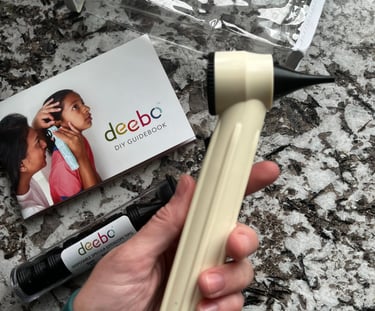
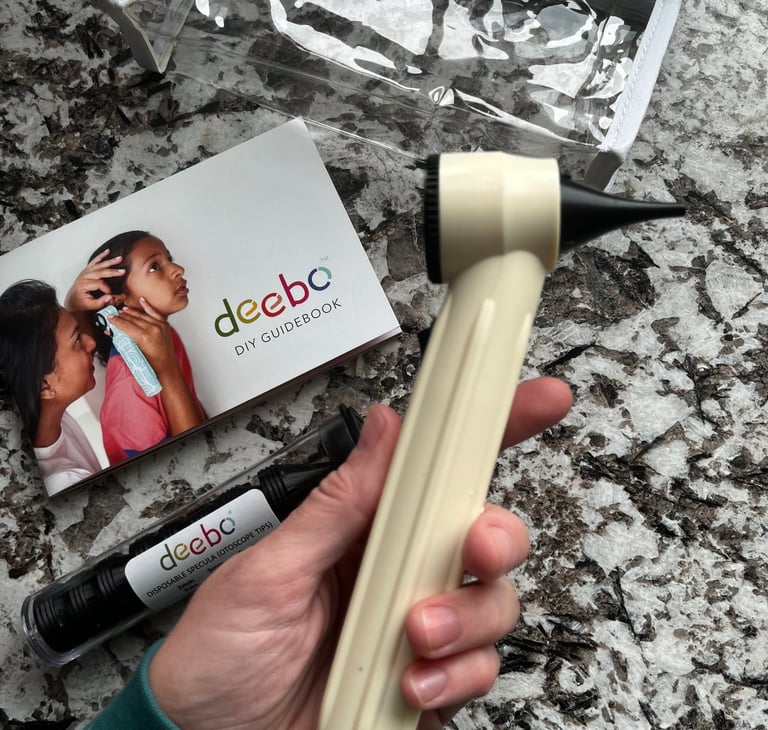
1) Otoscope (Deebo) — See Instead of Guess
Ear pain is one of the most stressful sick symptoms as a parent. Sometimes it’s an infection, sometimes fluid, sometimes wax, or pressure from congestion. Guessing only increases stress.
An otoscope helps me see what’s happening in the ear so I can support my child and decide whether to monitor at home or call our doctor.
Why I keep an otoscope in my toolkit:
Helps me observe the ear canal and eardrum (tympanic membrane)
Lets me distinguish redness, fluid, wax, or irritation
Helps monitor changes over time
Supports better communication with healthcare providers
What I look for:
Ear canal: Swelling? Discharge? Wax buildup? Redness?
Eardrum (tympanic membrane):
Healthy: pearly gray, smooth, not bulging
Concerning: red, cloudy, bulging, fluid or bubbles
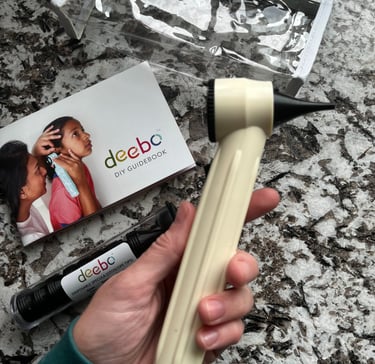
My favorite at-home otoscope is the Deebo Otoscope — it is easy to use, has a magnified view and comes with a really helpful pamphlet to help you learn how to use it. I originally had an otoscope I purchased from Amazon a while back but the viewing lens is so much smaller than the Deebo making it harder to visualize the ear canal and tympanic membrane.
Deebo discount code (15% OFF) code: heidi15 (grab it here)
2) Pulse Oximeter — Oxygen & Heart Rate Peace of Mind
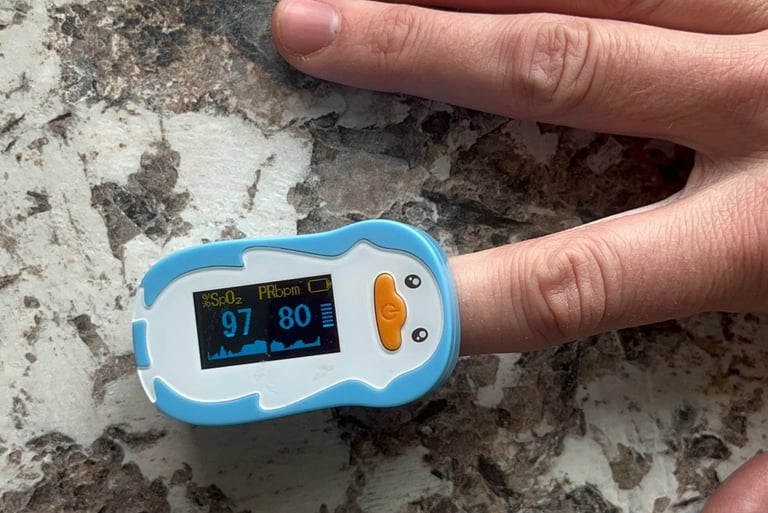
A pulse oximeter measures:
Oxygen saturation (SpO₂) — how much oxygen your blood is carrying
Normal oxygen saturation: 95–100% in most kids and adults
Borderline SpO2: 92–94% → monitor closely
Low SPO2: Below 92% → contact your providerWhat to Look For on a Reading
Number: Steady, not jumping all over
Waveform: Smooth little bumps on the screen indicate the device is picking up an accurate pulse
Heart rate: Matches your child’s appearance and age-appropriate norms
Heart rate — how fast your heart is beating
Normal resting heart rate by age (approximate):
Newborn (0–1 months): 100–200 beats per minute
Infant (1–12 months): 100–180 beats per minute
Toddler (1–3 yrs): 95–145 beats per minute
Preschool (3–5 yrs): 80–125 beats per minute
School-age (6–12 yrs): 70–120 beats per minute
Teen (13–18 yrs): 60–100 beats per minute
Adult: 60–100 beats per minutes
Quick tip: If the number looks normal but the waveform is choppy or the heart rate seems off, try a different finger, warm the hand, or have your child sit still.
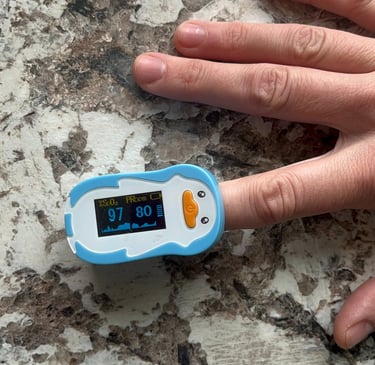
My favorite: Pulse Oximeters (I have the simple finger ones and then I have the more heavy duty one I bought when my youngest was an infant).
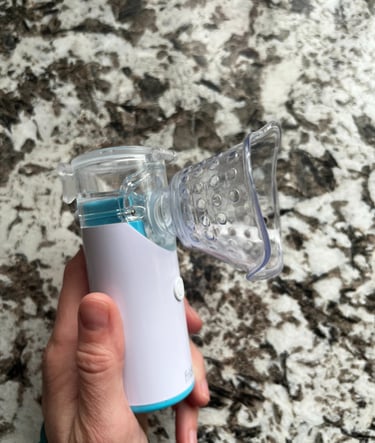
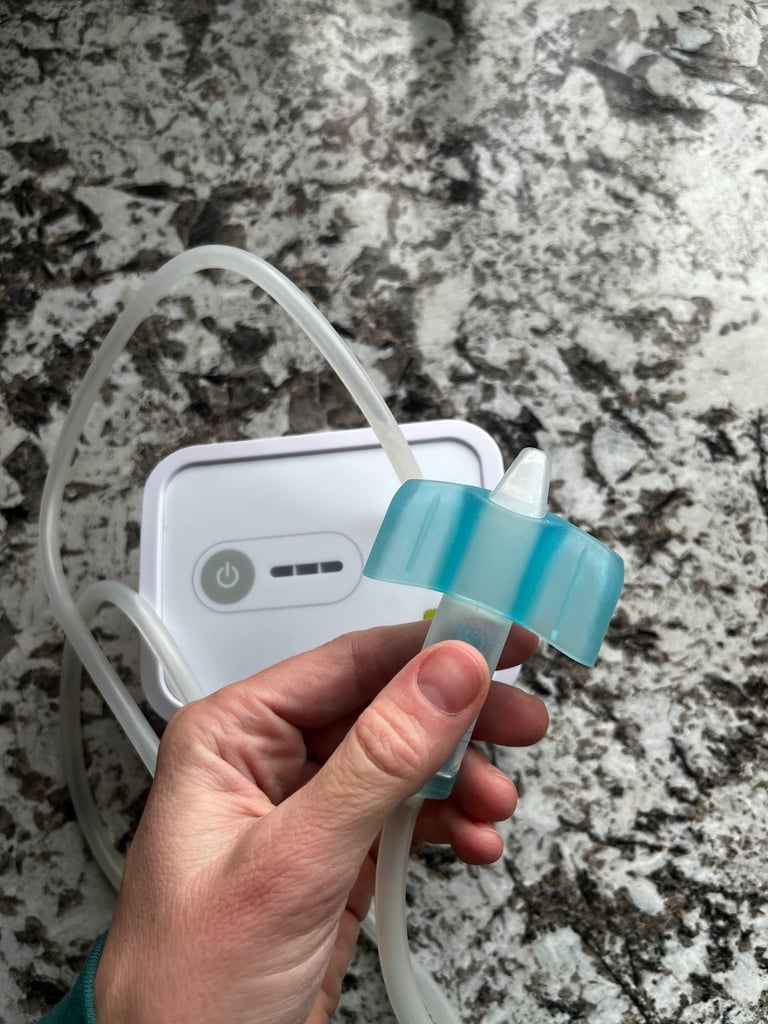
3) Nebulizer — Gentle Respiratory Support
Nebulizers are great for congestion, cough, or reactive airways. They help:
Hydrate airways
Loosen mucus so it is easier to expel
Support natural airway clearing
Soothe irritation
How I use my nebulizer:
Saline nebulizing is my go-to at home using either 0.9% or 3% saline
I use it at when there is any congestion or coughing involved
Medicinal solutions are available if needed with a prescription from your provider
If your new to nebulizing and aren't sure how to nebulize or even what it is I wrote in in depth blog post here for more information.
My favorite Nebulizer (I have both the desktop nebulizer and the Frida hand hold nebulizer) and saline is linked here for you.
4) Nasal Suction + Saline
Babies and toddlers can not blow their nose so congestion can be so hard on their little bodies.
Congestion can effect their:
Sleep
Feeding
Ear pressure (which can lead to ear pain). If the fluid in your eustachian tubes (the tube that connects your ears to your nose) can't drain then fluid can build up and cause an ear infection or even worse mastoiditis.
My routine:
Saline spray or xlear nasal spray to loosen mucus. I really like Xlear spray because it also can help sooth the nasal passage better then just saline. They have it in a kids spray and adult spray.
Wait 30–60 seconds
Gentle suction
Before naps and bed time and as needed through out the day
If you want more tips on managing congestion in babies I wrote this blog post you might find helpful.
My favorite suction and nasal sprays: Nasal Suction, Saline Drops, Xlear spray (20% OFF with Fullscript link)
When I Call the Doctor
Even with these tools, I always seek medical care if I notice:
Difficulty breathing or fast breathing
Chest retractions or wheezing
Oxygen readings consistently low
Severe ear pain or drainage
High, persistent fever (especially if it goes away and then comes back 3-4 days later)
Lethargy, dehydration, or worsening symptoms
When your Mama intuition and gut feeling say something is wrong! Trust that feeling Mama!
Trust your instincts — you know your child best.
Quick Reference — My At-Home Sick Day Toolkit
Deebo Otoscope — check ears
Pulse oximeter — monitor oxygen + heart rate
Nebulizer — thin mucus and support respiratory tract
Saline + nasal suction — congestion relief
These simple tools give me peace of mind and help me make informed decisions while caring for my family. I hope they help you to!
You got this Mama!